




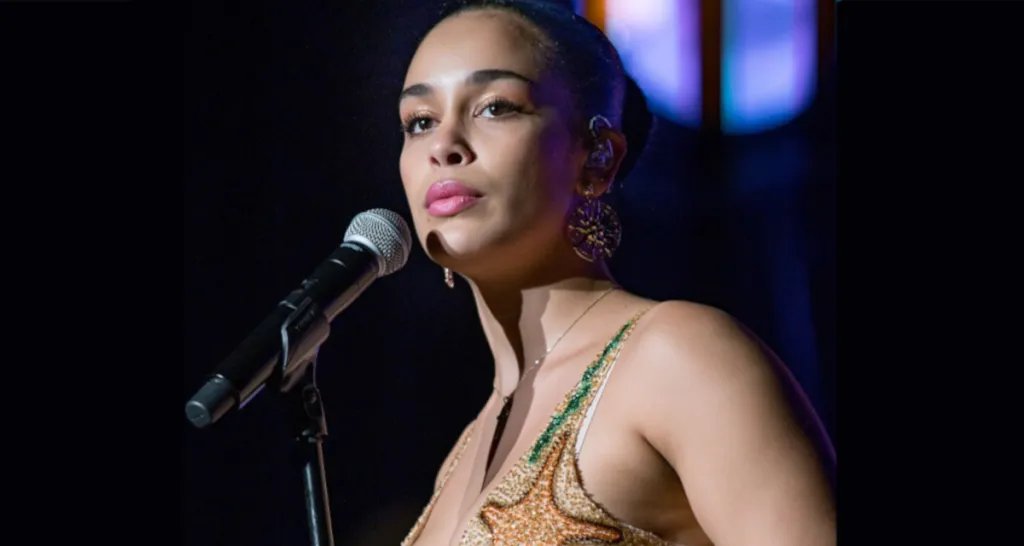
A live performance from Jorja Smith, whose label is calling for ‘I Run’ credit and compensation. Photo Credit: Justin Higuchi
FAMM Demands Recognition and Compensation for Haven’s “I Run”
The UK-based record label FAMM is seeking credit and compensation for the track “I Run” by Haven, which features vocals by Kaitlin Aragon. This demand was made clear in a detailed Instagram post addressing the effects of artificial intelligence on the creative industry.
Initially, “I Run” gained traction with streams but was removed from digital service providers for allegedly using unauthorized vocals mimicking Jorja Smith. The track was re-released with Aragon’s vocals, accruing 16.1 million Spotify streams, significantly boosting her listener count.
Behind the scenes, discussions between Haven’s producers, Harrison Walker and Jacob Donaghue, and Smith’s label have been less publicized. FAMM claims both versions of the song infringe on Smith’s rights and exploit the contributions of her collaborators.
Label Rejects Remix Proposal
FAMM stated they declined Haven’s proposal for Smith to feature on an “I Run” remix. The label emphasized that Smith would need to approve such a feature, though she has not publicly commented on the matter.
In their statement, FAMM suggested that AI was used not only for the soundalike vocals but also in writing the song’s lyrics and melody. They expressed plans to distribute any awarded share of the song to Smith’s co-writers based on their contributions to her catalog.
While FAMM might pursue legal action, no official response has been received from Haven. The label aims to initiate a broader conversation about the need for digital service providers to implement AI audio tags.
FAMM’s Full Statement on “I Run” and AI’s Impact on Music
“We are navigating uncharted waters as AI increasingly influences music consumption. This discussion is crucial for creatives, extending beyond Jorja Smith to the wider industry.
Recently, a track claimed to be an unreleased Jorja Smith song went viral. However, the vocals were generated by AI to sound like Jorja, without her consent, misleading the public.
The track was removed before it could chart, and despite replacing the AI vocals with a human singer, both versions still infringe on Jorja’s rights and the work of her collaborators.
AI’s rapid advancement outpaces regulation, exploiting creators’ work without credit or compensation. This is an opportunity to discuss AI’s role in the arts and establish a regulatory framework.
The track used AI to mimic Jorja’s voice and name, misleading listeners into believing it was her work. It was marketed aggressively, circumventing usual takedown procedures.
Public confusion was a key strategy, with multiple distributors involved in misleading marketing. Spotify confirmed the track’s removal due to impersonation, with no royalties paid.
Haven’s team proposed a remix with Jorja after the track went viral, needing to legitimize it. We declined this offer, suspecting AI manipulation was involved.
AI-generated material should be clearly labeled, allowing the public to choose their consumption. Creators allowing their work to train AI should receive credit and compensation.
If AI contributed to “I Run,” we intend to allocate shares to Jorja’s co-writers proportionally. This reflects the training on her song catalog.
Victoria Monét’s comments on AI artist Xania Monét highlight the uncanny resemblance, raising concerns about AI’s training on existing artists’ work.
We must address the implications of AI, as creators are often overlooked in the race for AI advancement. Artists’ journeys involve talent, determination, and effort, which shouldn’t be overshadowed by AI’s evolution.
“I Run” exemplifies the need for regulatory measures to prevent losing control over creative rights.”